What Is Eid ul Adha? The Festival of Sacrifice Explained
On this page
Eid ul Adha, also called Eid al-Adha or Bakrid, is the Festival of Sacrifice. It falls on 10 Dhul Hijjah, the day after Arafah, and remembers Prophet Ibrahim’s (AS) readiness to sacrifice his son for Allah. In 2027 it is expected on Sunday, May 16 in the US, UK and Saudi Arabia, and Monday, May 17 in South Asia.
Eid ul Adha is the bigger of the two Eids in Islam. It comes at the end of the first ten days of Dhul Hijjah, while pilgrims are completing the Hajj. Muslims everywhere pray the Eid prayer, give Qurbani and share the meat with family and the poor.
What does Eid ul Adha mean?
Eid means festival, and adha comes from the word for sacrifice. So Eid al-Adha means the Festival of Sacrifice. In Arabic it is also called Eid al-Kabir (the big Eid) and Yawm an-Nahr (the Day of Sacrifice).
In South Asia it is widely known as Bakrid or Bakra Eid. Most people link the name to the Urdu word bakra, a goat, though some connect it to the Arabic baqarah, a cow. Turkish Muslims say Kurban Bayram, and in Malaysia and Indonesia it is Hari Raya Haji.
The story of Ibrahim and Ismail
Prophet Ibrahim (AS) saw in a dream that he was sacrificing his son Ismail (AS). He told his son, and Ismail replied: “Father, do as you are commanded. You will find me, if Allah wills, one of the patient” (Surah As-Saffat 37:102). As Ibrahim was about to carry out the command, Allah called out to him and ransomed Ismail with “a great sacrifice,” a ram (37:107).
The story isn’t about blood. Allah says plainly: “It is not their meat or their blood that reaches Allah. It is your devotion that reaches Him” (Surah Al-Hajj 22:37). Eid ul Adha is a yearly reminder to put Allah first, even when it costs us something we love.
How it differs from Eid ul Fitr
Islam has two Eids. Eid ul Fitr marks the end of Ramadan, and its special charity is Zakat al-Fitr. Eid ul Adha comes about seventy days later, at the end of Hajj, and its special act is the Qurbani sacrifice. Eid ul Fitr is one day of celebration. Eid ul Adha runs into the three days of Tashreeq that follow. For more on what both days mean, read why Eid is important.
When is Eid ul Adha in 2027?
The Islamic calendar is lunar, so Eid moves about 11 days earlier each year. Current estimates for 2027 are:
| Country | Expected date of Eid ul Adha 2027 |
|---|---|
| USA and Canada | Sunday, May 16 |
| United Kingdom | Sunday, May 16 |
| Saudi Arabia | Sunday, May 16 (Umm al-Qura) |
| Australia | Sunday, May 16 or Monday, May 17 |
| Pakistan, India and Bangladesh | Monday, May 17 |
The Day of Arafah is expected on Saturday, May 15. Final dates depend on the Dhul Hijjah moon sighting, which is announced about ten days before. Our Eid al-Adha 2027 date guide has more detail, and the Muslim holidays 2027 calendar lists the rest of the year.
The first ten days of Dhul Hijjah
The Prophet ﷺ said there are no days in which good deeds are more loved by Allah than these ten days (Sahih al-Bukhari 969). They end with the Day of Arafah, the high point of the pilgrimage, which is explained in Eid ul Adha and Hajj. Many people fast the first nine days, and above all the Day of Arafah. They also make extra dhikr and give charity. If you plan to give Qurbani, the Sunnah is not to cut your hair or nails from 1 Dhul Hijjah until your animal is sacrificed. The Bakrid fasting guide covers which days to fast and which not to.
How Muslims celebrate Eid ul Adha
- Takbeer. From Fajr on the Day of Arafah until Asr on the 13th, the takbeer of Tashreeq is said after every fard prayer. The words are in our Eid takbeer and dua guide.
- Getting ready. Take a ghusl, wear your best clothes and put on perfume. Unlike Eid ul Fitr, the Sunnah is not to eat before the prayer, and to eat first from your Qurbani afterwards.
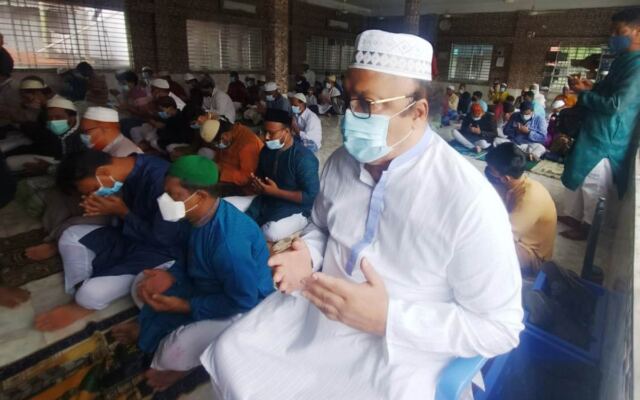
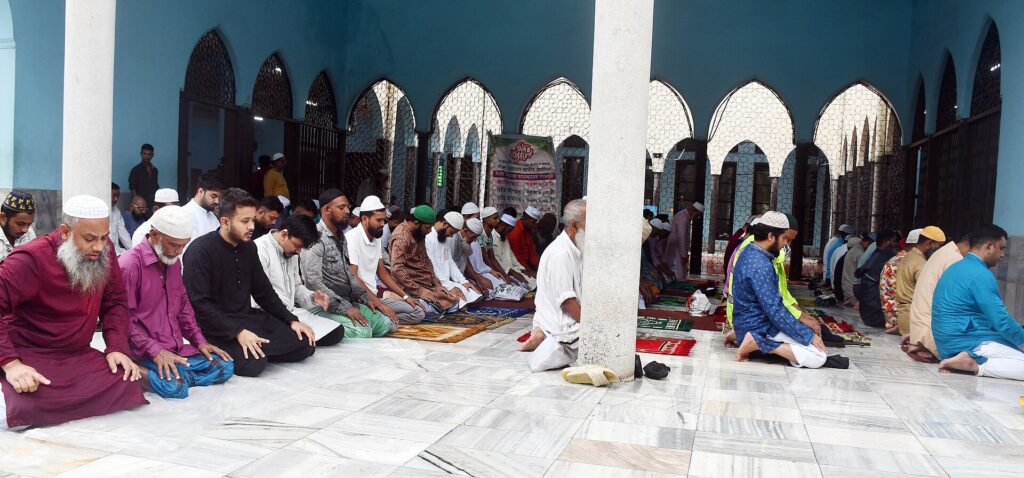
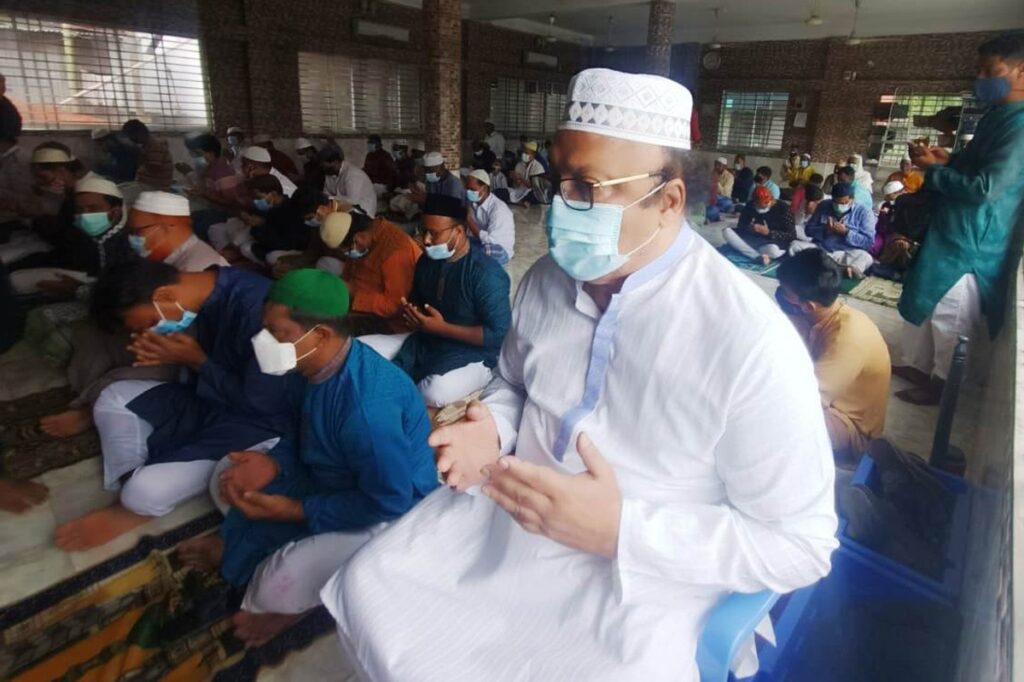
- The Eid prayer. Two rak’ahs in congregation in the morning, followed by the khutbah. See how to pray the Eid al-Adha prayer.
- Qurbani. The sacrifice starts after the prayer and can continue until sunset on the 12th (the 13th for Shafi’is).
- Family and visiting. People greet each other with “Eid Mubarak” or “Taqabbalallahu minna wa minkum,” visit relatives and share food.
Fasting is not allowed on Eid day or during the days of Tashreeq. The Prophet ﷺ called them “days of eating, drinking and remembering Allah” (Sahih Muslim 1141).
Qurbani: the heart of the day
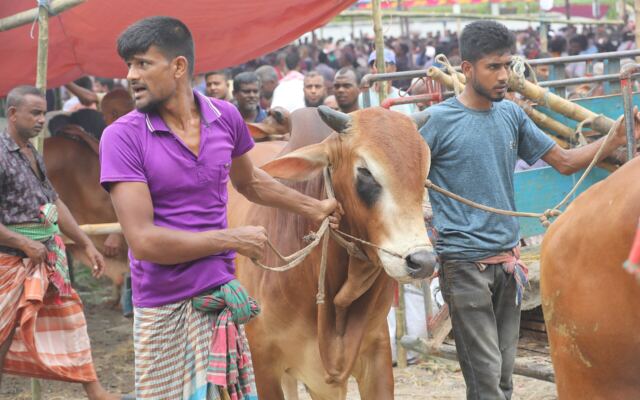
For those who can afford it, Eid ul Adha isn’t complete without Qurbani. The Prophet ﷺ said: “Whoever has the means and does not sacrifice, let him not come near our place of prayer” (Sunan Ibn Majah 3123, graded hasan). In the Hanafi school it is wajib for adults who hold the nisab. The other schools call it a confirmed Sunnah.
The basics are short:
- A sheep or goat is one person’s Qurbani. A cow, buffalo or camel can be shared by seven.
- Minimum ages: goat 1 year, sheep 1 year (or 6 months if well grown, in the Hanafi school), cattle 2 years, camel 5 years.
- The animal must not be clearly blind in one eye, clearly sick, badly lame or extremely thin (Sunan Abu Dawud 2802).
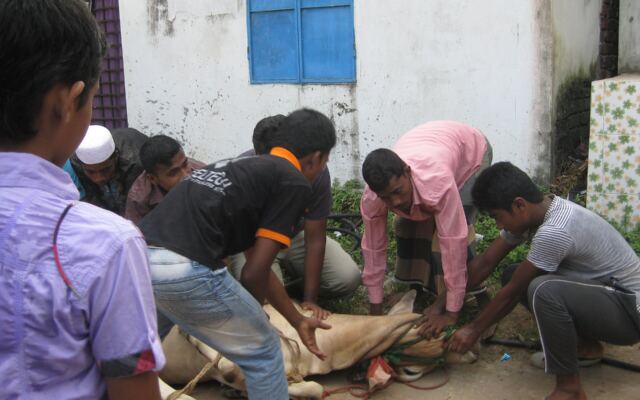
- It is slaughtered while alive, with a sharp knife and Bismillahi Allahu Akbar, after the Eid prayer.
For the full detail, read what is Qurbani and the Qurbani rules.
Eid ul Adha for Muslims in the West
In the US, UK and Australia, most families can’t keep or slaughter an animal at home. Most commercial abattoirs stun animals first, and some European countries require it by law. Finding poor families to receive the meat in a Western suburb isn’t easy either. So most Muslims here give their Qurbani through a charity overseas, which all four schools allow.
If you go that way, ask three things: is the animal stunned, is it slaughtered after the Eid prayer, and who eats the meat? At Qurbani Charity the answers are no stunning, after the prayer, and Rohingya refugees and poor families in rural Bangladesh. You also get photos and video of your animal.
Quick questions
How long does Eid ul Adha last? Eid day is 10 Dhul Hijjah, followed by the three days of Tashreeq (11th to 13th). Qurbani can be given until sunset on the 12th, or the 13th in the Shafi’i school.
Is Eid ul Adha the same as Bakrid? Yes. Bakrid is the common South Asian name for the same festival.
Can I give Qurbani for a parent who has died? Yes. Many people add a share in the name of a parent or relative who has passed away.
Do husband and wife each give Qurbani? In the Hanafi school, each spouse who owns the nisab in their own right gives their own.
Ready to give this year? See how our Qurbani donation works and the prices, or go straight to the reservation form.
Give your Qurbani with us
We buy healthy animals of the right age in rural Bangladesh and slaughter them by hand after the Eid prayer, with no stunning. The meat goes to Rohingya refugees and poor families, and you get photos and video of your animal.
Reserve from $170 How our Qurbani donation worksDates are estimates based on astronomical calculations and the Umm al-Qura calendar, and depend on the moon sighting. Hadith references include the collection and number so you can check them. Where a narration is graded weak, we say so. Scholars differ on some details, so ask a local scholar about your own situation.