Eid al-Adha Takbeer and Qurbani Duas: Arabic, Transliteration and Meaning
On this page
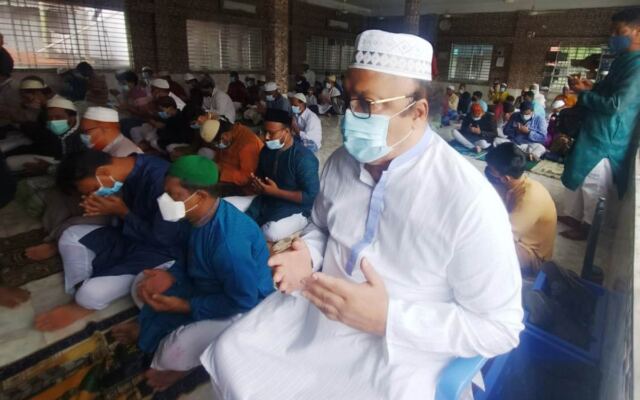
The Eid al-Adha takbeer is: Allahu Akbar, Allahu Akbar, la ilaha illallah, wallahu Akbar, Allahu Akbar, wa lillahil hamd. It is said after every fard prayer from Fajr on the Day of Arafah (9 Dhul Hijjah) until Asr on the 13th. At the moment of slaughter, the dua is Bismillahi Allahu Akbar.
Dhul Hijjah is a month of remembering Allah. Allah says: “Remember Allah during the appointed days” (Surah Al-Baqarah 2:203).
The Eid al-Adha takbeer (Takbeer at-Tashreeq)
اللَّهُ أَكْبَرُ، اللَّهُ أَكْبَرُ، لَا إِلَٰهَ إِلَّا اللَّهُ، وَاللَّهُ أَكْبَرُ، اللَّهُ أَكْبَرُ، وَلِلَّهِ الْحَمْدُ
Allahu Akbar, Allahu Akbar, la ilaha illallahu wallahu Akbar, Allahu Akbar, wa lillahil hamd.
Meaning: Allah is the Greatest, Allah is the Greatest. There is no god but Allah, and Allah is the Greatest. Allah is the Greatest, and all praise belongs to Allah.
This is the wording used in the Hanafi school and by many others, reported from Ibn Mas’ud. Some scholars, including many Shafi’is, begin with Allahu Akbar three times. Both are fine.
When to say it
- From: after Fajr on 9 Dhul Hijjah, the Day of Arafah.
- Until: after Asr on 13 Dhul Hijjah. That is 23 fard prayers in all.
- When: straight after the salam of each fard prayer, before getting up or talking.
- How many times: once is the minimum in the Hanafi school. Many people say it three times.
In 2027 that means from Fajr on Saturday, May 15 until Asr on Wednesday, May 19 (expected US and UK dates).
Who says it, and how loud
In the Hanafi school it is wajib after each fard prayer for every adult. Men say it aloud and women quietly. In the other schools it is a Sunnah. It is also Sunnah to say the takbeer aloud on the way to the Eid prayer, and generally throughout the first ten days. Ibn Umar and Abu Hurairah used to go to the market in those days saying the takbeer, and people would join in (reported by al-Bukhari without a full chain of narrators).
Duas for Qurbani
Before the slaughter
The Prophet ﷺ recited this when he turned his rams towards the Qibla (Sunan Abu Dawud 2795):
إِنِّي وَجَّهْتُ وَجْهِيَ لِلَّذِي فَطَرَ السَّمَاوَاتِ وَالْأَرْضَ حَنِيفًا وَمَا أَنَا مِنَ الْمُشْرِكِينَ، إِنَّ صَلَاتِي وَنُسُكِي وَمَحْيَايَ وَمَمَاتِي لِلَّهِ رَبِّ الْعَالَمِينَ، لَا شَرِيكَ لَهُ وَبِذَٰلِكَ أُمِرْتُ وَأَنَا مِنَ الْمُسْلِمِينَ، اللَّهُمَّ مِنْكَ وَلَكَ
Inni wajjahtu wajhiya lilladhi fataras-samawati wal-arda hanifan wa ma ana minal-mushrikin. Inna salati wa nusuki wa mahyaya wa mamati lillahi rabbil-‘alamin. La sharika lahu wa bidhalika umirtu wa ana minal-muslimin. Allahumma minka wa lak.
Meaning: “I have turned my face to the One who created the heavens and the earth, turning away from all else, and I am not one of those who associate partners with Him. My prayer, my sacrifice, my life and my death are for Allah, Lord of the worlds. He has no partner. This is what I have been commanded, and I am one of the Muslims. O Allah, it is from You and for You.”
At the moment of the cut
بِسْمِ اللَّهِ وَاللَّهُ أَكْبَرُ
Bismillahi wallahu Akbar (often said as “Bismillahi Allahu Akbar”).
Meaning: In the name of Allah, and Allah is the Greatest. The Prophet ﷺ said this when he slaughtered his rams (Sahih Muslim 1966). Saying Allah’s name is a condition of halal slaughter: “Do not eat of that over which the name of Allah has not been mentioned” (Surah Al-An’am 6:121).
After the slaughter
اللَّهُمَّ تَقَبَّلْ مِنِّي
Allahumma taqabbal minni.
Meaning: O Allah, accept it from me. If you are slaughtering for someone else, say minhu (from him) or minha (from her), or name them. The Prophet ﷺ asked Allah to accept his sacrifice from himself, his family and his Ummah (Sahih Muslim 1967).
Common mistakes
- Forgetting the takbeer after salam. If you remember before leaving your place or talking, say it. If not, carry on and say it after the next prayer.
- Stopping at Eid. The takbeer continues through the days of Tashreeq, until Asr on the 13th.
- Thinking the long dua is required. It is Sunnah. The only required words at slaughter are the tasmiyah, saying Allah’s name.
- Saying the tasmiyah too early. It should be said right at the cut, not minutes before.
Eid greetings
“Eid Mubarak” (a blessed Eid) is the common greeting. The Companions used to say to each other: Taqabbalallahu minna wa minkum, “May Allah accept it from us and from you.”
If your Qurbani is done for you
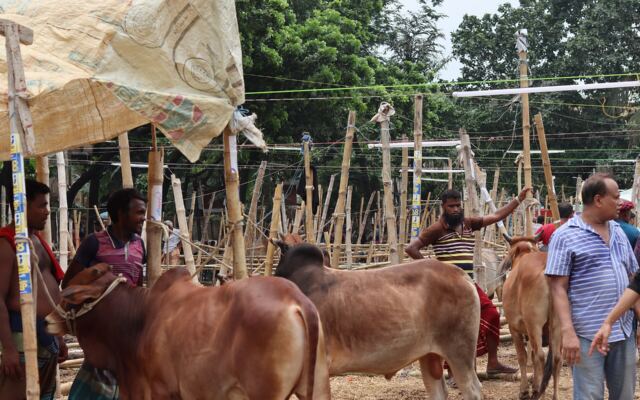
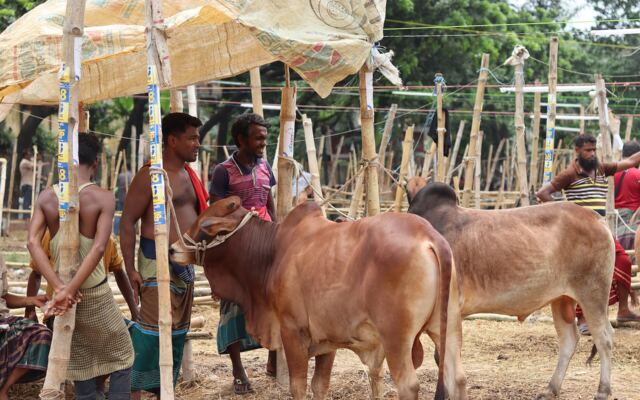
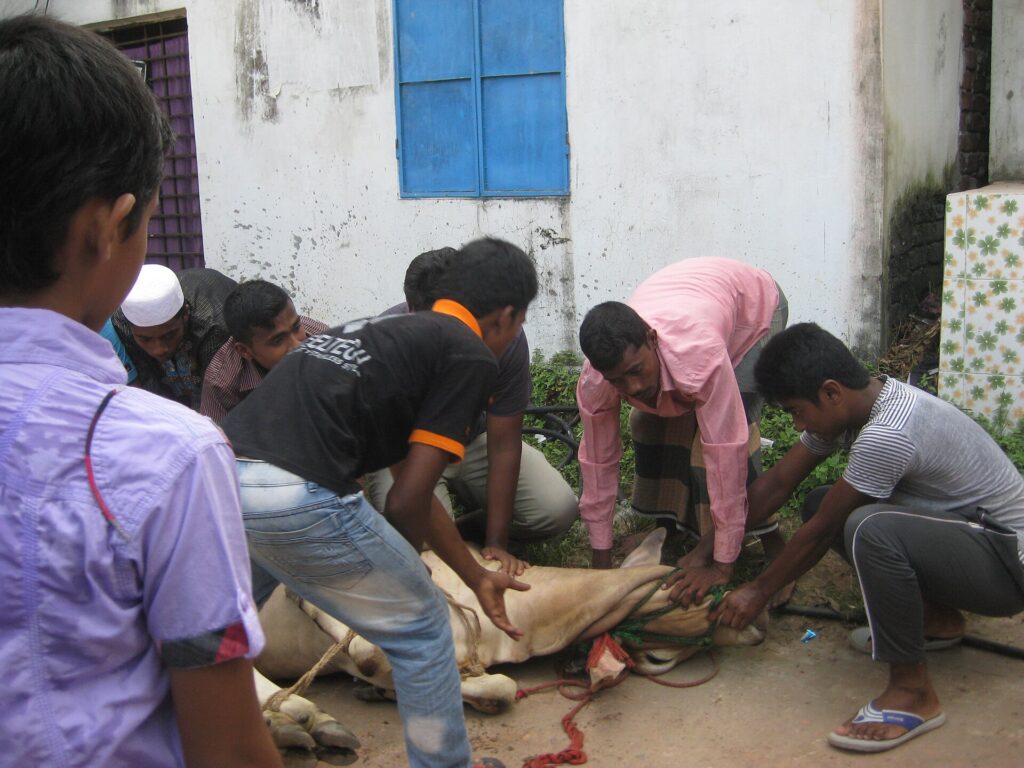
When a charity slaughters on your behalf, the person slaughtering says the tasmiyah over your animal, and you can make the duas yourself wherever you are. Our team in rural Bangladesh says Bismillahi Allahu Akbar over every animal at the cut, slaughters by hand after the Eid prayer, and never stuns. You get photos and video once yours is done.
Quick questions
Do women say the takbeer? Yes, quietly.
Do I say the takbeer after Sunnah or nafl prayers? It is mainly after the fard prayers. Saying it at other times is still good dhikr.
Do I say it if I pray alone? Yes, in the Hanafi school it applies whether you pray in congregation or alone.
For the rest of the season, see fasting in Dhul Hijjah and the Qurbani rules. To arrange your sacrifice, read how our Qurbani donation works.
Give your Qurbani with us
We buy healthy animals of the right age in rural Bangladesh and slaughter them by hand after the Eid prayer, with no stunning. The meat goes to Rohingya refugees and poor families, and you get photos and video of your animal.
Reserve from $170 How our Qurbani donation worksDates are estimates based on astronomical calculations and the Umm al-Qura calendar, and depend on the moon sighting. Hadith references include the collection and number so you can check them. Where a narration is graded weak, we say so. Scholars differ on some details, so ask a local scholar about your own situation.